
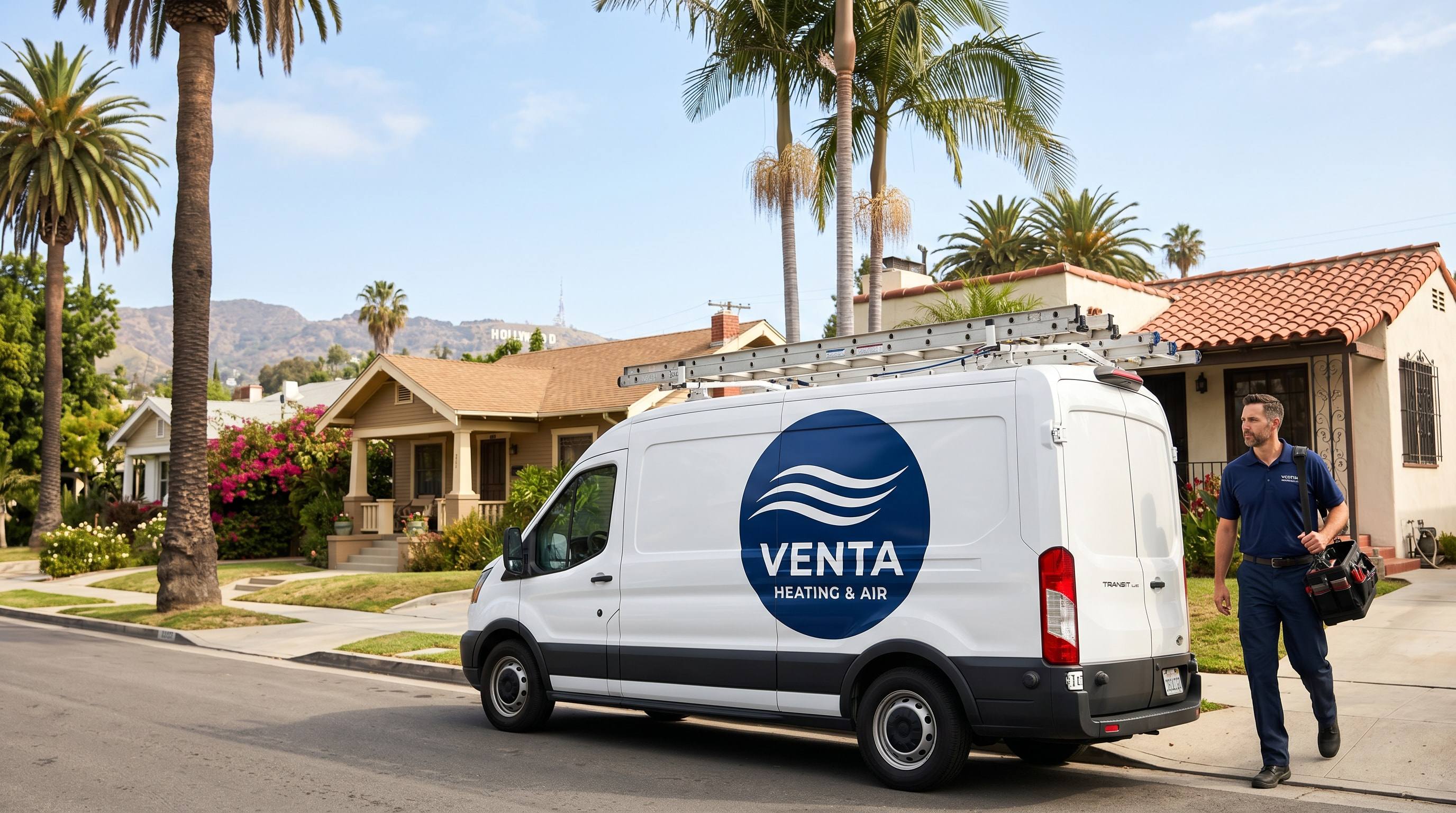
The 11pm Saturday no-cooling call from a 1962 Fountain Avenue dingbat is almost always one of three things: a window unit that finally died, central AC that doesn’t exist (and never did), or an unauthorized under-the-window heat pump that the HOA just red-tagged. WeHo’s 1.9 square miles are dominated by 1940s–60s low-rise apartments, dingbat-style multifamily, and mid-century condos, almost none of which were built with central air. The work here isn’t maintenance; it’s retrofitting cooling into buildings that were never designed for it.
What we’ve learned doing dozens of these installs in WeHo: mini-split heat pumps are the answer maybe 90% of the time, HOA approval is the slow part, and sound limits at the property line are the spec that gets equipment rejected. Variable-speed inverter compressors at 50–55 dB clear most board reviews on first submittal.
What works in WeHo’s pre-1980 housing stock
The buildings here have a few common patterns that determine the install:
- Dingbats and walk-ups (1955–1968): open ground-floor parking, wood-frame stucco, no duct chases. Mini-splits go on rear walls, line sets routed through closets.
- Mid-century condos (1960–1972): heated by perimeter hot-water radiators, no AC at all. Single outdoor unit per stack, indoor heads in living + bedroom.
- 1980s+ mid-rises: original through-wall AC sleeves still functional in some buildings; we replace the chassis without disturbing the architectural opening.
What rarely works: trying to add ducts. The chases don’t exist, the soffits would eat ceiling height, and HOAs almost never approve the structural work.
HOA navigation, sound limits, and what boards actually care about
WeHo HOAs typically pull on three levers: equipment visibility, dB rating at the property line, and line-set routing. We design for all three before submittal. Equipment goes rear-of-building or interior-courtyard out of street view; sound spec sheets show the unit at full and reduced fan speeds; line-set runs through existing chases or behind matching paint where exposed.
Approvals usually run 2–4 weeks once submitted. We carry the paperwork through and answer board questions directly so you don’t become the architectural-review homework.
Discreet service for industry residents
A meaningful share of WeHo residents work in entertainment, music, or media, and privacy and security needs are real here. Unmarked or low-branded vehicles are available on request. Technicians are trained on confidentiality and presentation. We coordinate parking and access in advance so we’re not blocking your driveway during a 10am Zoom or holding open a gate when guests arrive. If you have a private gate code, security signoff, or building concierge instructions, we follow them. Mention your needs on the first call.
Tenants, landlords, and who pays for the repair
WeHo has the strongest rent-stabilization ordinance in LA County and an active tenant-rights culture. We work both sides honestly: landlords and property managers calling in tenant-side AC service, and tenants needing a written diagnostic report to document a habitability concern. The diagnostic is the same whoever pays for it; we don’t change findings based on who hired us.
The Sunset Strip and Beverly Grove commercial mix
The Strip’s restaurants, hotels, retail, and offices run on rooftop packaged units, split-system DX, and (in the high-rises) building-wide systems. We service this corridor for property managers routinely, same-day for no-cool calls, scheduled replacements, and after-hours work to avoid disrupting business operations. CSLB C-20 covers both residential and light commercial.
Coverage and dispatch
Sunset Strip, Beverly Center area, Beverly Grove, Mid-City West, Norma Triangle, Tri-West, the West Hollywood West historic district, and the Hollywood Hills above Sunset. Plus Beverly Hills, Santa Monica, Culver City, and east into Los Angeles County. CSLB #1138898 (C-20). $89 diagnostic; the price we say at booking is the price you pay.